

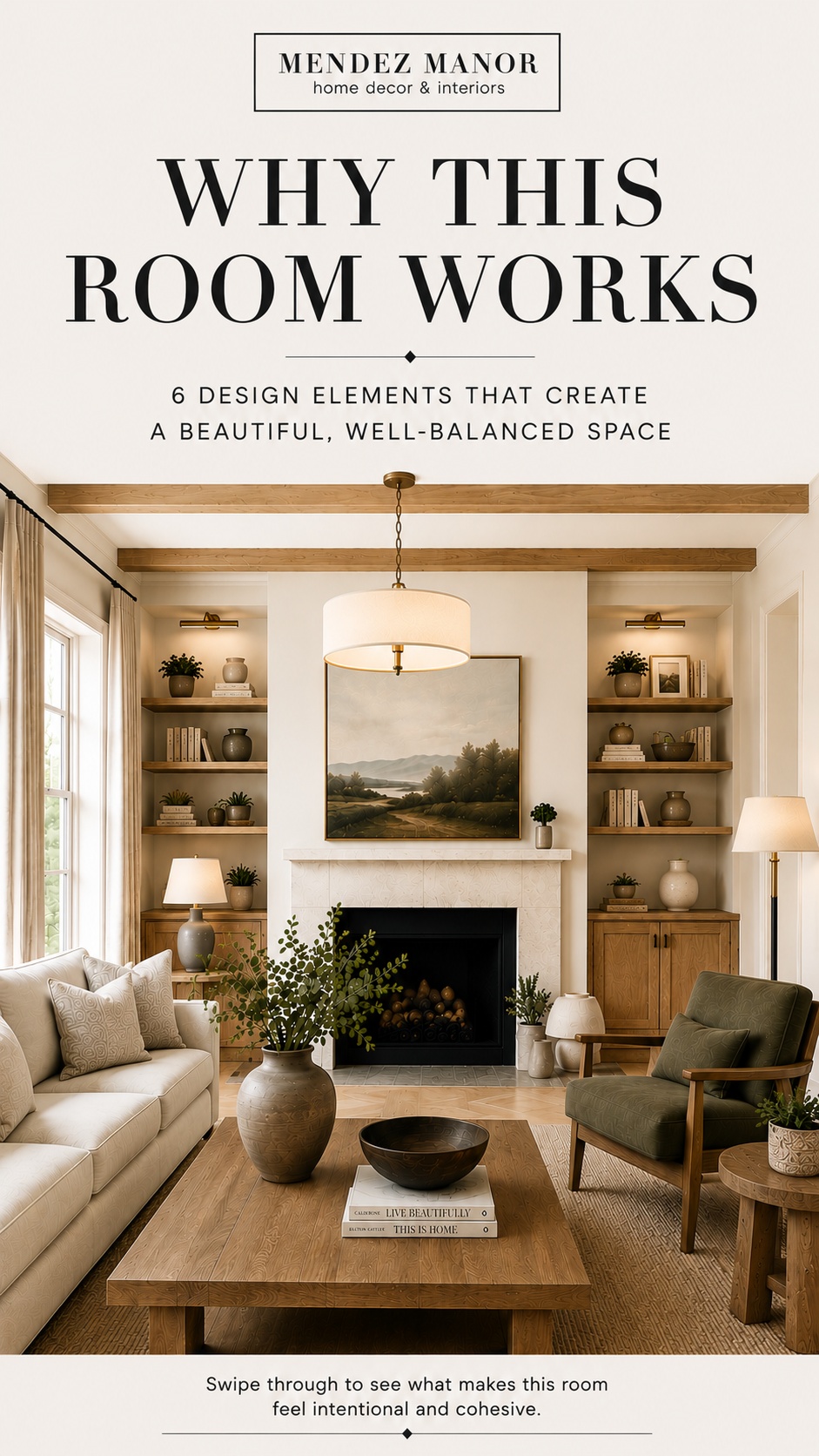
Have you ever walked into a room and felt like everything just works? The space feels comfortable, balanced, and inviting, even if you can’t immediately identify why. While every home is unique, there are a handful of interior design principles that consistently show up in beautiful, cohesive spaces. In this living room, six key design elements work together to create a room that feels intentional and well-designed. Let’s take a closer look at each one.
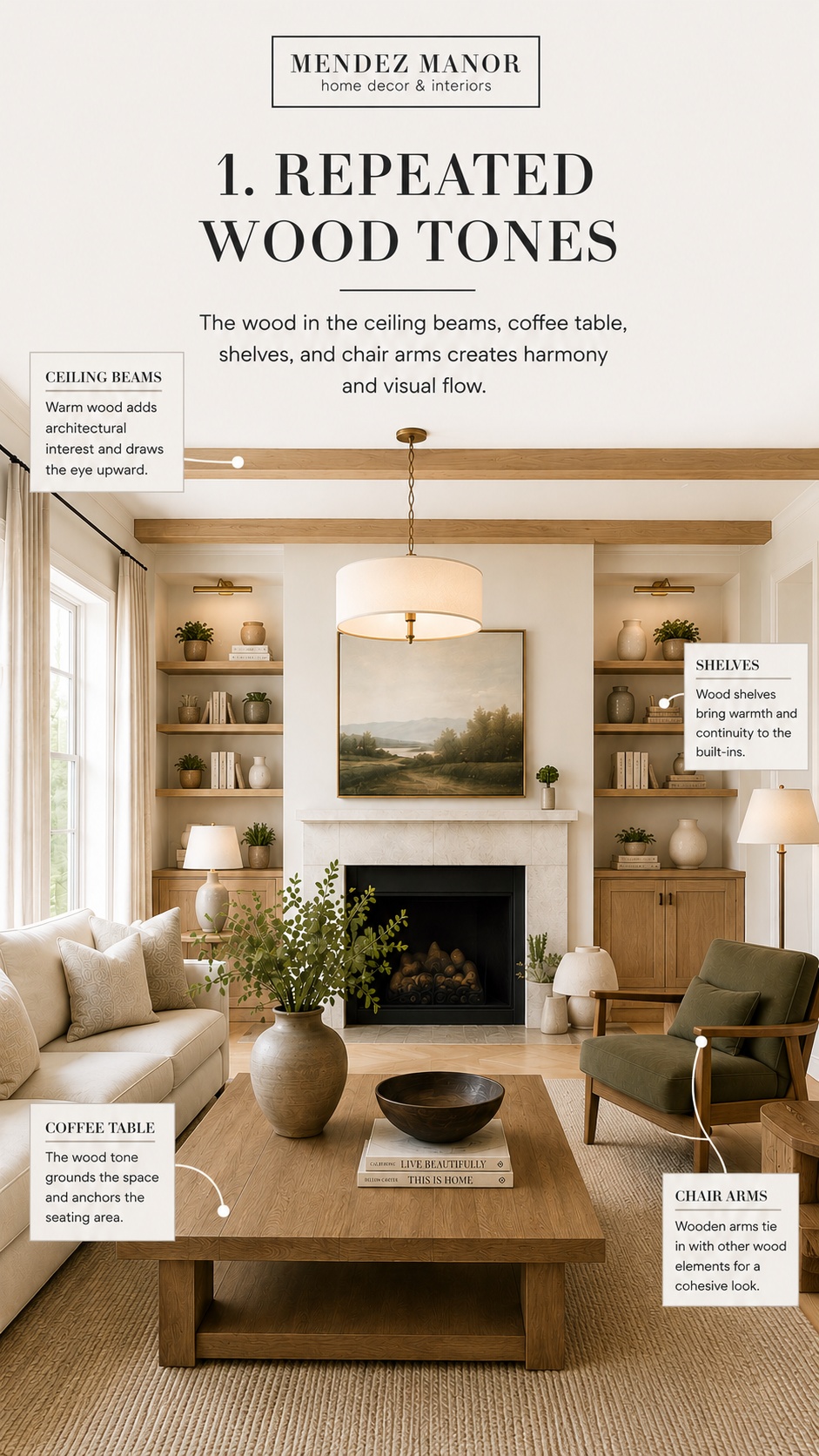
1. Repeated Wood Tones
One of the easiest ways to create a cohesive room is by repeating materials throughout the space. In this living room, warm wood tones appear in the ceiling beams, built-in shelving, furniture, and decorative accessories. While every wood finish doesn’t need to match perfectly, repeating similar tones helps create visual continuity. The eye naturally moves around the room, connecting these elements and creating a sense of harmony.
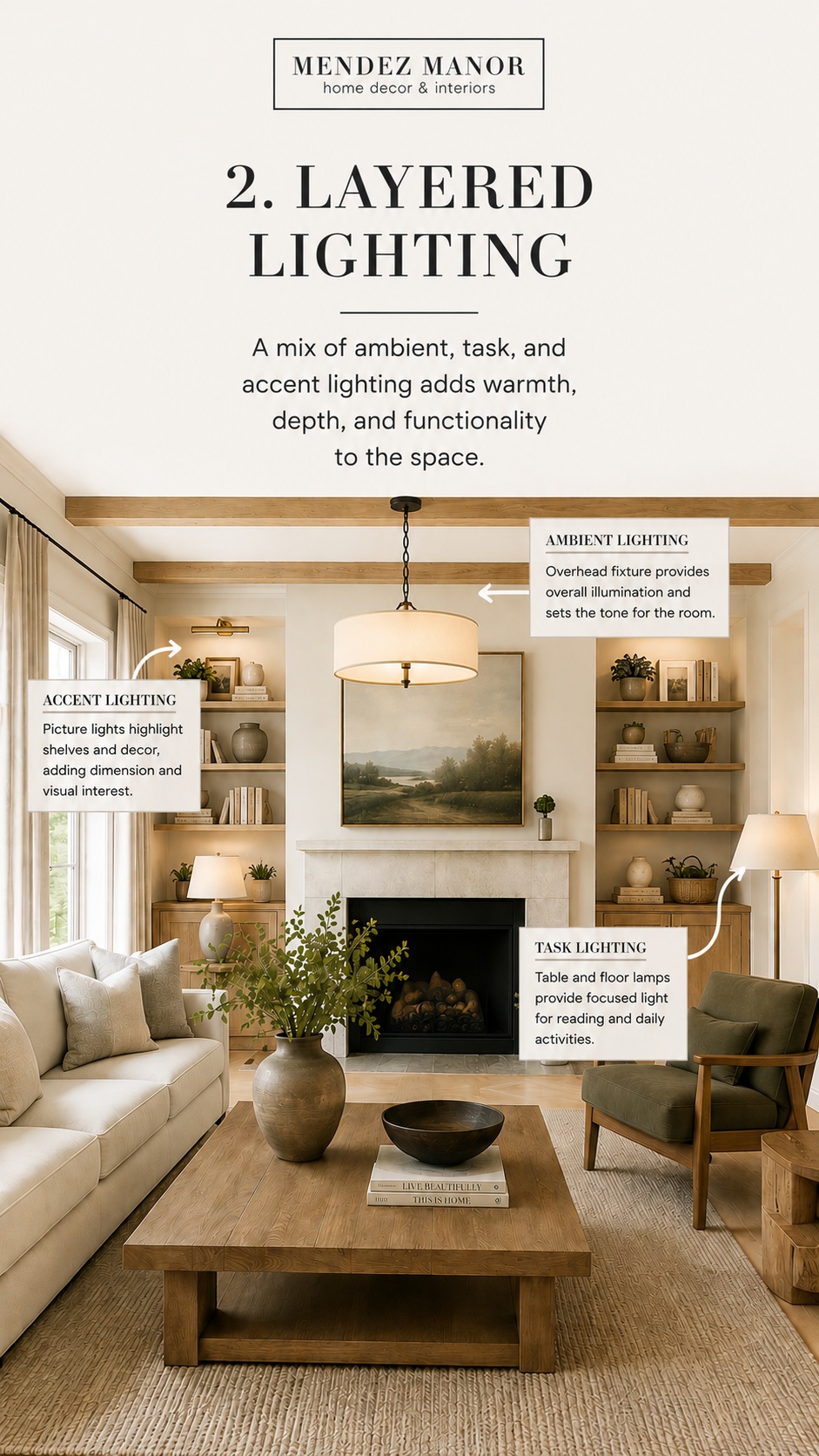
2. Layered Lighting
Beautiful rooms rarely rely on a single overhead light source. Instead, they incorporate multiple layers of lighting to add warmth, function, and depth. In this space, recessed lighting provides general illumination, a statement pendant draws attention to the center of the room, picture lights highlight the built-in shelving, and table lamps add a softer glow. Layering different types of lighting helps a room feel welcoming throughout the day and evening.
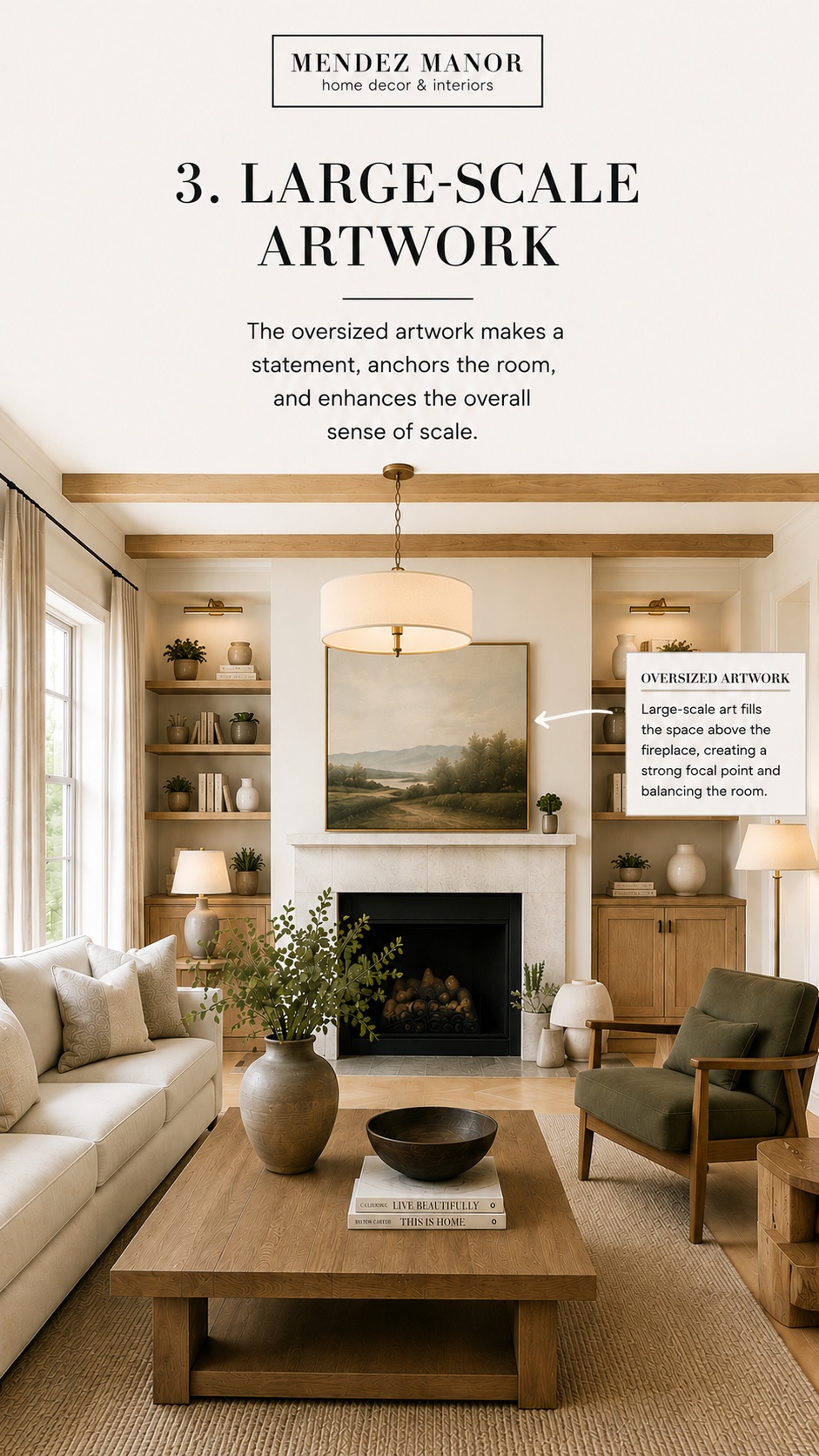
3. Large-Scale Artwork
Artwork helps anchor a room and create a focal point. One common decorating mistake is choosing artwork that is too small for the wall. In this living room, the oversized artwork above the fireplace provides the proper scale for the space and immediately draws the eye. Large-scale artwork helps fill vertical space, adds personality, and creates a stronger visual impact than several smaller pieces scattered throughout the room.
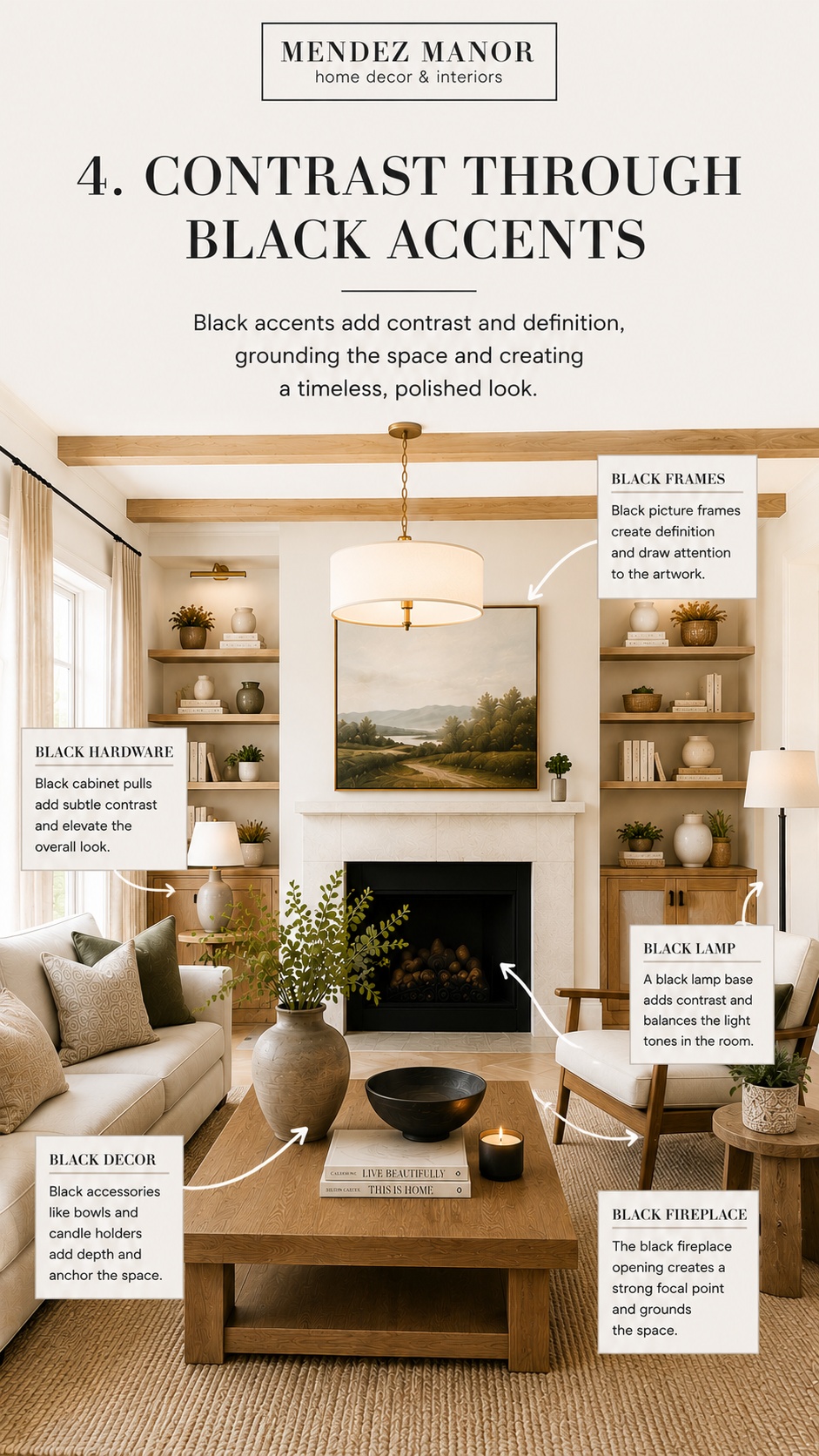
4. Contrast Through Black Accents
A room filled entirely with light colors can sometimes feel flat. Introducing a darker accent color helps create balance and visual interest. In this space, black accents appear throughout the room in lighting, hardware, frames, and decorative accessories. These darker elements provide contrast against the softer neutral palette and help define the room’s architectural and decorative features.
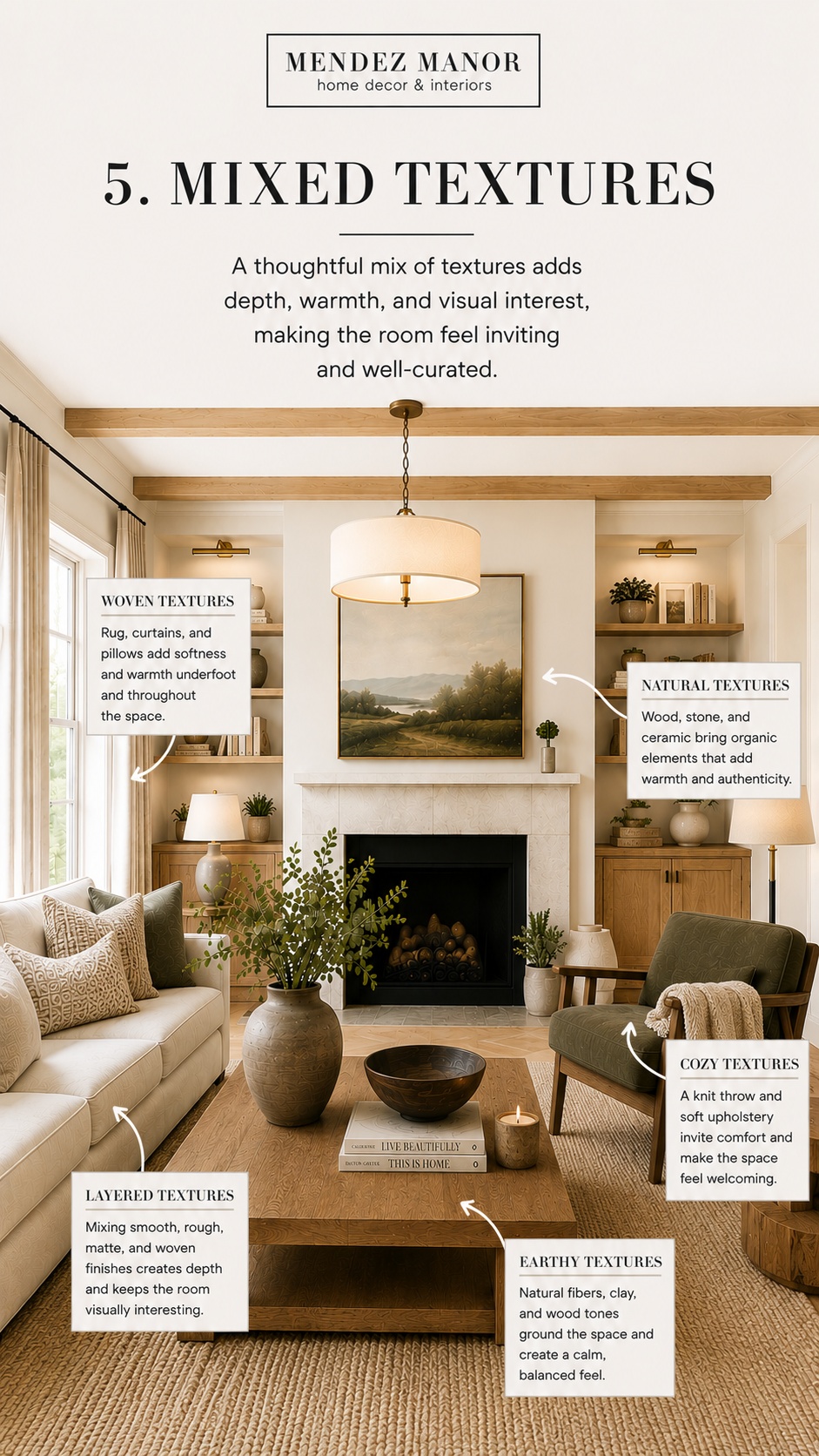
5. Mixed Textures
Texture plays a major role in making a room feel layered and inviting. Even when using a relatively neutral color palette, combining different materials prevents a space from feeling one-dimensional. This room incorporates woven textures, soft upholstery, natural wood, ceramic accessories, metal finishes, and textiles. The variety of textures adds warmth and richness while keeping the overall design visually interesting.
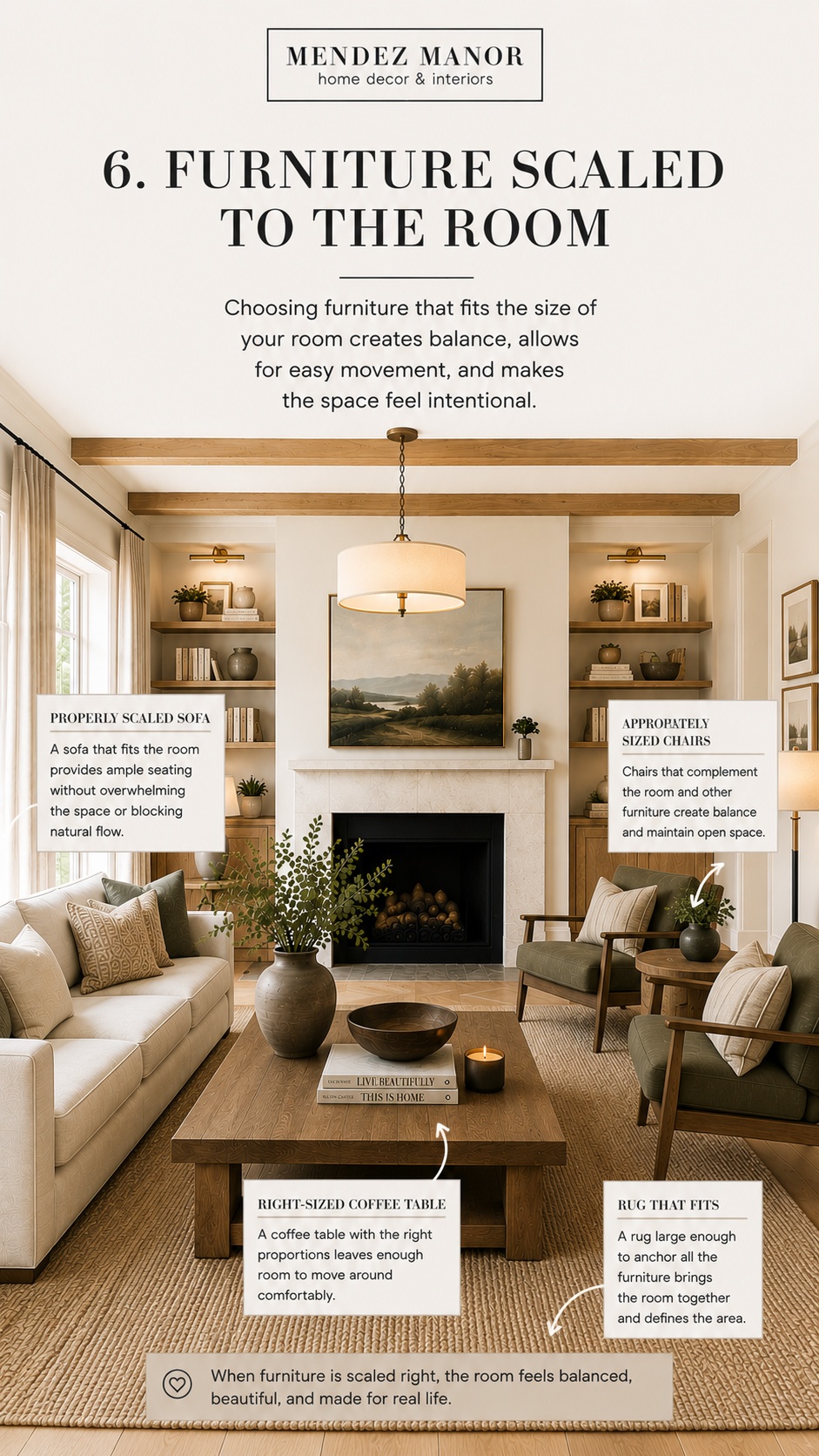
6. Furniture Scaled to the Room
Even beautiful furniture can feel out of place if it isn’t properly sized for the room. Scale and proportion are essential to creating a balanced space. In this living room, the seating, coffee table, area rug, and accessories are appropriately sized for both the room and one another. The result is a space that feels comfortable, functional, and visually balanced without feeling crowded or sparse.
Bringing It All Together
While each of these design elements contributes to the overall look of the room, it’s the combination of all six that makes the space feel truly successful. Repeated materials, layered lighting, proper scale, contrast, texture, and thoughtfully selected artwork work together to create a home that feels intentional, cohesive, and welcoming. If your own space feels unfinished or disconnected, focusing on these principles can be a great place to start.
Shop This Living Room Design
This post contains affiliate links. Scroll and click image to shop.

If you’ve been trying to create a home that feels more cohesive but aren’t quite sure what to focus on next, my Design Clarity Quiz is a great place to start. In just a few minutes, you’ll answer a handful of questions about your space, your goals, and where you’re feeling stuck.
The Mendez Manor design team will personally review your responses and provide customized feedback to help you identify your next best steps. Whether you’re furnishing a new home, updating an existing room, or simply looking for more direction, the quiz is designed to help you move forward with greater confidence and clarity.
Take the Design Clarity Quiz here and let’s start creating a home that feels intentional and pulled together.